
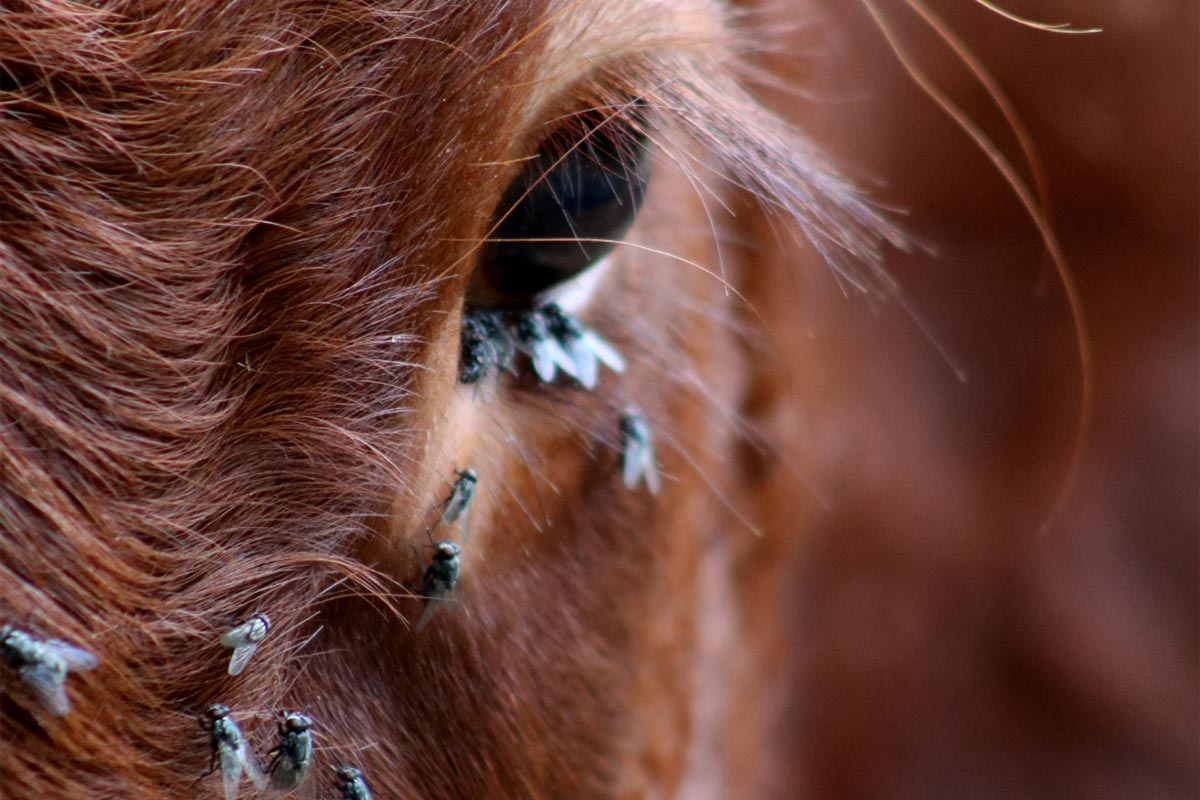
Natural Fly Control for Livestock: Managing Flies, Midges and External Parasites
Flies, biting midges, ticks and lice are familiar challenges for livestock farmers. However, these pests can cause more than irritation. They can affect animal welfare, disrupt grazing and feeding, and contribute to serious health problems in sheep and cattle.
Flystrike in sheep, summer mastitis in cattle and midge-borne diseases such as Bluetongue and Schmallenberg are all important considerations when managing livestock health.
So, how can farmers reduce fly pressure naturally while keeping their animals healthy and resilient?
At Whole Health Agriculture, we encourage a preventative, whole-health approach. By combining good husbandry, nutrition, careful observation and natural management methods, farmers can develop practical strategies for managing external parasites and reducing unnecessary chemical use.
In this article, we explore common livestock pests, natural fly control methods and the approaches WHAg farmers use with their own animals.
Why Are Flies and External Parasites a Problem for Livestock?
Flies, midges, ticks and lice affect livestock in different ways. Some cause irritation and discomfort, while others can transmit disease or lead to serious health problems.
Common challenges include:
Flies: Can cause irritation, stress and reduced grazing time. Certain species are associated with summer mastitis, eye infections and flystrike.
Biting midges: Culicoides midges can transmit Bluetongue and Schmallenberg viruses.
Ticks: Can cause irritation and transmit diseases affecting livestock.
Lice: Can lead to itching, rubbing, damaged coats and poor condition.
The risk varies with the season, weather, environment and type of livestock. Consequently, understanding the pests affecting your animals is an important first step towards managing them.
Bluetongue and Schmallenberg: Diseases Spread by Biting Midges
WHAg has two veterinary-led webinar resources for farmers wanting to understand Bluetongue and its implications for livestock health.
Our free Bluetongue Q&A webinar provides an opportunity to explore questions surrounding the disease.
For further , detailed discussion, see another of our webinars Bluetongue: A Veterinary Discussion with Q&A.
Learn More About Bluetongue in Sheep and Cattle
Biting midges are particularly important because they can transmit diseases affecting sheep and cattle.
Bluetongue disease is a viral infection spread primarily by infected Culicoides midges. It can affect sheep, cattle and other ruminants, although the symptoms and severity vary between animals.
Signs can include fever, swelling around the head, mouth lesions, lameness and reduced milk production. Some infected animals show few obvious symptoms.
Schmallenberg virus is also spread by biting midges. Infection can be associated with reproductive problems, including abortions, stillbirths and congenital abnormalities in lambs and calves.
These diseases highlight why farmers need to consider more than the immediate irritation caused by insects.
Good husbandry and measures to reduce insect exposure can form part of a wider livestock health plan. However, they do not replace disease-specific veterinary prevention and control measures.
Bluetongue is a notifiable disease in the UK. Suspected cases must be reported promptly through the appropriate animal health authorities. Farmers should also follow current official guidance on vaccination, movement restrictions and disease control.
Flystrike in Sheep: Why Prevention Matters
Flystrike is another serious problem associated with flies, particularly during warmer, humid weather.
It occurs when certain blowflies lay eggs on sheep, often in areas where the fleece is damp, soiled or affected by wounds. The resulting maggots feed on the animal’s tissues and can cause severe injury.
Early signs of flystrike in sheep may include restlessness, repeated stamping or biting at the fleece, isolation from the flock and changes in behaviour.
Flystrike can develop rapidly and requires immediate attention. Affected sheep need prompt treatment, including removal of maggots and appropriate wound care, with veterinary advice where necessary.
Prevention involves regular flock inspections, good parasite management, attention to fleece condition and reducing factors that attract blowflies.
Can Flystrike Be Prevented Naturally?
At WHAg, we’ve been exploring how preventative husbandry and whole-health management can contribute to reducing flystrike risk.
Our farmer-led flystrike field trial examined practical approaches and recorded outcomes from participating farms.
If you’re interested in the results, our free Flystrike Field Trial Outcomes & Q&A webinar shares the findings, along with a free report and decision tree to help farmers explore their management options.
Are Synthetic Chemicals the Answer?
Conventional insecticides and parasite treatments have an important role in livestock management. However, farmers may also want to reduce routine chemical use, manage costs and consider the wider environmental effects of their farming practices.
A whole-health approach looks beyond the pest itself.
Rather than simply asking how to kill or repel flies, we also consider the animal’s overall health, its environment and the conditions that allow pest problems to develop.
This means looking at nutrition, pasture management, housing, stress, hygiene and the animal’s ability to cope with everyday challenges.
Understanding the Three Phases of Livestock Health
WHAg’s Three Phase Model for Health helps farmers recognise changes in their animals and decide when intervention is needed.
Green Phase: Animals are healthy, thriving and maintaining good condition. Good nutrition, husbandry and preventative management help maintain this.
Amber Phase: Early changes suggest an animal is not quite thriving. This is an opportunity to investigate the cause and introduce appropriate support.
Red Phase: Animals are unwell and require prompt veterinary assessment and treatment.
Recognising changes early can make a significant difference, particularly during periods of increased pest pressure.
Host vs Parasite: Who’s Winning?
Resilient hosts = fewer problems.
Weakened hosts = parasite heaven.
Parasites don’t succeed simply because they are present. Problems develop when environmental conditions, pest numbers and the health of the host combine to create an opportunity.
For example, animals that are stressed, poorly nourished or already dealing with another health problem may find additional pest pressure particularly challenging.
Therefore, building and maintaining good livestock health is an important part of managing external parasites.
Understanding the lifecycle of each pest also helps farmers decide where and when to intervene.
4 Steps to Managing Flies and External Parasites Naturally
A practical whole-health strategy brings together several approaches. These can be adapted to different livestock species, farming systems and seasonal challenges.
1. Minimise Exposure
Start by looking at the environment in which your animals live.
- Manure and bedding: Keep housing clean and remove manure and soiled bedding regularly to reduce suitable breeding sites for certain flies.
- Shelter: Provide suitable shaded or sheltered areas where animals can escape some of the pressure from flies.
- Hygiene: Keep animals clean and attend promptly to wounds, discharges and soiled fleece, which may attract flies.
- Regular checks: Monitor livestock closely during warmer weather and periods of increased insect activity.
Different pests have different lifecycles and breeding habitats. Therefore, management methods should be matched to the species involved.
2. Reduce Stress
Flies and other biting insects can cause considerable irritation. Animals may spend more time stamping, rubbing, bunching together or trying to escape the insects.
This can interfere with feeding, resting and normal behaviour.
Providing suitable shelter, maintaining consistent routines and reducing unnecessary handling stress can help livestock cope during periods of increased pest pressure.
Some WHAg farmers also incorporater emedies including Rescue Remedy and homeopathic ‘Triple A’, into their wider approach to managing stress.
3. Support Livestock Health and Resilience
Good nutrition, healthy digestion and appropriate mineral intake all contribute to livestock wellbeing.
Farmers using a whole-health approach may also incorporate garlic, apple cider vinegar and medicinal herbs into their management routines, where appropriate for the species and individual animal.
Homeopathic preparations traditionally considered by WHAg farmers in relation to pests and bites include:
- Fly, tick and midge nosodes
- Sulphur
- Ledum
- Staphysagria
The choice of preparation depends on the individual animal and the circumstances.
Pammy's Natural Fly Control Approach for Dairy Cows
WHAg Livestock Health Adviser Pammy has developed a homeopathic combination that she uses with her dairy herd during periods of increased fly pressure.
Her approach includes:
Nosode: Psorinum 30c, or another pest-specific nosode.
Homeopathic remedies: Ledum, Staphysagria, Sulphur and Ignatia, all at 30c.
Pammy’s preparation involves mixing one dose of each remedy into approximately 250ml of water, with a tablespoon of vodka or cider vinegar as a preservative.
The mixture is labelled and stored away from sunlight.
Pammy has traditionally used the preparation around troughs and buckets, as well as in her own management of the herd during fly-heavy periods.
This is an example of one farmer’s practical experience rather than a standardised fly-control treatment. As with any livestock preparation, the suitability of ingredients, application methods and food-production requirements should be considered.
4. Explore Natural Fly Repellents for Livestock
Natural fly repellents are another option that farmers may wish to explore alongside good husbandry.
These include herbal preparations and essential oils such as:
- Neem
- Citronella
- Lavender
- Eucalyptus
Essential oils must be appropriately diluted and selected with care, as some can irritate animals or be unsuitable for particular species. Never apply neat essential oils directly to livestock.
It’s also important to consider where products are applied, particularly around the eyes, wounds and udders of dairy animals.
Farmer experience: Pat Aherne's herbal fly repellent
Dairy farmer Pat Aherne has developed a herbal fly repellent that he uses on his farm.
His experience provides another practical example of how farmers are incorporating natural preparations into their everyday livestock management.
What About Conventional Fly and Parasite Treatments?
Conventional treatments can be necessary, particularly where an infestation is severe or an animal’s welfare is at risk.
However, routine chemical use also raises questions about resistance, environmental effects, residues, withdrawal periods and cost.
A preventative whole-health strategy encourages farmers to consider the wider picture and use appropriate interventions when needed.
The aim is to maintain healthy animals, identify problems early and avoid unnecessary treatments wherever possible.
Natural Pest Management for Smallholders and Pet Owners
Many of the principles discussed here also apply to smallholders and people keeping smaller numbers of animals.
Good hygiene, regular observation, suitable nutrition and attention to the environment are all important when managing fleas, ticks and mites.
However, different species have different sensitivities. Products and preparations suitable for cattle or sheep may not be appropriate for poultry, dogs or cats.
For further reading, WHAg recommends exploring specialist resources on natural parasite management, including Fleas Be Gone by Christina Chambreau and information from Dogs Naturally Magazine and CAM4animals.
Final Thoughts: Prevention Starts with Healthy Livestock
Flies, midges and external parasites will always be part of livestock farming. However, understanding their lifecycles and the conditions that favour them gives farmers more opportunities to manage the problems they cause.
A whole-health approach combines good husbandry, nutrition, natural management methods and careful observation to support healthier, more resilient animals.
By recognising problems early and taking preventative action, farmers can work towards reducing pest pressure while maintaining animal welfare and using veterinary treatments when necessary.
Whether you’re managing flies on dairy cattle, preventing flystrike in sheep or considering the risks of midge-borne diseases, the starting point is the same: healthy animals, good management and an understanding of the challenges on your farm.
Stay Connected to the Future of Healthy Farming
Our newsletter brings you real farmer stories, views and news of our latest training and events, plus on-farm tips and insights.