
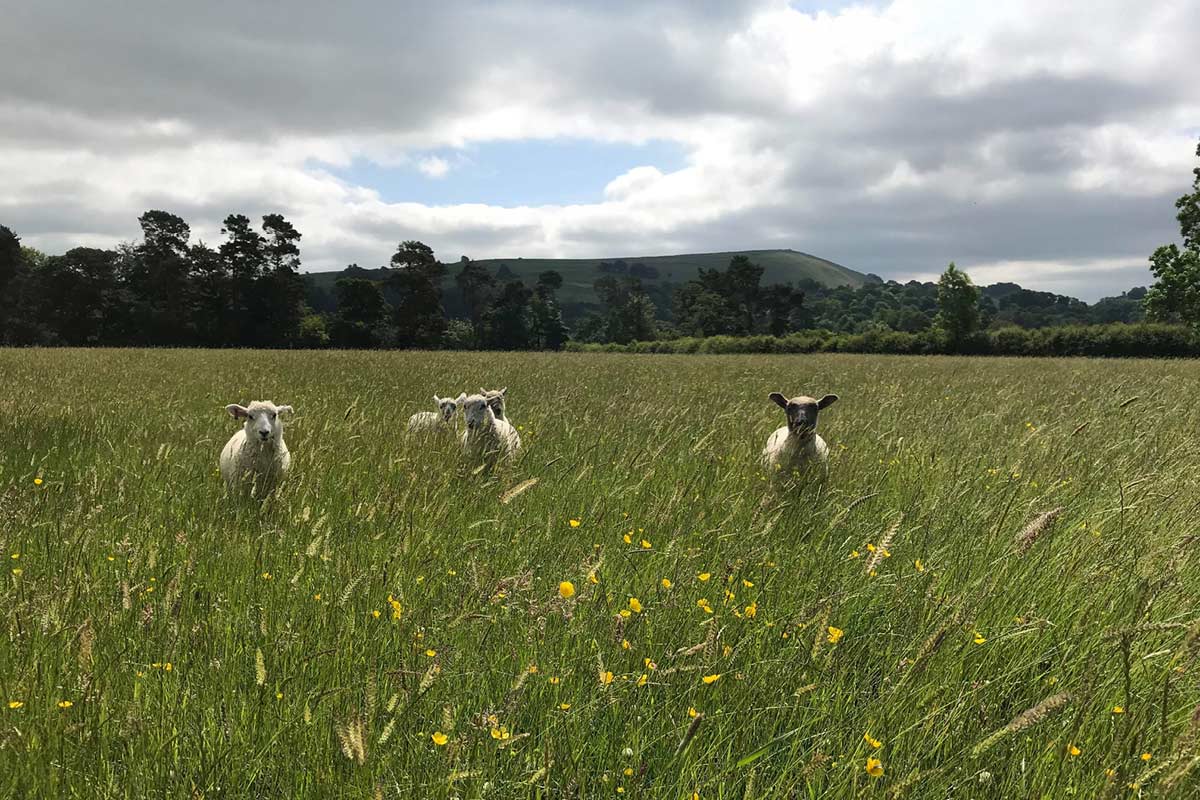
Herbs for Sheep Health: Natural Approaches from an Experienced Farmer
By Liz Morgan, Stockperson and Farmer
Herbs and medicinal plants have long been used in traditional sheep farming to support flock health. They are used for a range of common health problems, from digestive upsets and parasites to maintaining good condition and general wellbeing.
But which herbs are good for sheep? And how can farmers incorporate them into everyday flock management?
From garlic and slippery elm to wormwood, thyme and seaweed, sheep farmer Liz Morgan shares her experience of using herbs and natural preparations with her own flock. She explains how she uses them, the challenges she has encountered and what she has learned about supporting sheep health naturally.
How I Started Using Herbs with My Sheep
I was brought up on a Beef and Sheep farm in Breconshire. Like all other farmers I knew, when stock fell ill, antibiotics were the “go to” treatment. In fact, as far as I was aware, they were probably the only treatment available.
By 2015, I had been keeping and breeding sheep, sheepdogs, pigs, beef cattle and poultry for many years. However, I had begun to question the wisdom and effectiveness of routine antibiotic and vaccine use with farm livestock.
“I felt there must be a better and more natural way of keeping stock healthy.”
So, in 2015, I began exploring herbal medicine for both personal use and livestock care. I was unable to find a qualified animal herbalist, so I turned to other sources of information.
One particularly useful book was Juliette de Bairacli Levy’s The Complete Herbal Handbook for Farm and Stable. I also spoke to other farmers who were already using natural methods with their livestock.
I have not undertaken any formal training in herbalism. Instead, my knowledge comes from practical experience and information gathered over time from many different sources.
I keep a large writing pad in which I record which herbal remedies I have found most effective for particular illnesses or diseases. This is an ongoing process, and I am constantly adding new observations, illnesses and remedies as they arise in our livestock.
We have not had any antibiotics on the holding for about four years now. However, we occasionally use a conventional wormer, such as Albex, as well as products like Crovect or Clik for blowfly strike prevention or treatment.
Over the years, I’ve discovered how useful herbal remedies can be in maintaining a healthy flock. Here, I’ll share some of the herbs and natural preparations I’ve used, along with practical tips for other farmers interested in natural livestock care.
Looking for information on a particular sheep health problem?
Our Farm Health Problems resource brings together practical articles, natural approaches and learning resources to help farmers explore common livestock health challenges.
Herbal Remedies for Common Sheep Health Problems
Over time, I’ve built up a collection of herbs and natural preparations that I use for different health problems in my flock.
Some of the herbs I’ve found particularly useful include:
My Top Herbal Remedies
- Garlic: A powerful antiseptic and anti-toxic herb, excellent for fever reduction and deworming.
- Slippery Elm Bark: Effective for treating scours, especially when combined with honey.
- Wormwood, Cinnamon, Cloves, Thyme, and Cayenne: A potent herbal deworming blend.
- Lavender and Tea Tree Oil: Natural treatments for foot rot and scald.
Natural Supplements for Sheep Health
As well as using herbs for particular health problems, I include natural supplements as part of my approach to maintaining flock health.
Some of the preparations I’ve used include:
- Seaweed Meal: Rich in essential minerals and trace elements.
- Himalayan Rock Salt: Provides over 84 minerals and trace elements.
- Local Honey: Excellent for boosting weak newborn lambs.
Of course, good nutrition is about more than individual supplements. The quality of grazing, pasture diversity and soil health all contribute to the wider picture. Discover more about the connection between soil, pasture and livestock health and how a whole-health approach can support your animals.
My Tips for Farmers Interested in Herbal Medicine
If you’re thinking about introducing herbs and natural preparations into your flock management, I’d suggest starting gradually.
Start with familiar herbs. Garlic is a useful starting point, and you can expand your knowledge and collection over time.
Keep detailed records. I find it invaluable to record the herbs I’ve used, the health problems I’ve encountered and how my animals have responded.
Combine herbs with good husbandry. Nutrition, grazing management and regular observation are all important parts of maintaining healthy livestock.
Herbal treatments can sometimes take more time and hands-on administration than conventional methods. However, this has also encouraged me to observe my animals more closely and build my knowledge through experience.
There are occasions when conventional treatments are necessary, particularly in more serious cases. For me, the important thing is to keep learning and find practical ways to support the health of my animals.
Challenges and Considerations
- Herbal treatments may require more time and hands-on administration compared to conventional methods.
- Some conditions may still require conventional treatments in severe cases.
Conclusion: The Future of Natural Sheep Care
Through my own experience, I’ve found that herbal remedies can play a valuable role in maintaining flock health and reducing reliance on routine antibiotic use.
There is always more to learn. As farmers share their experiences and observations, we can continue to build our understanding of natural approaches to livestock health.
For me, it’s about combining traditional knowledge with practical farming experience and good husbandry to keep our animals as healthy as possible.

About the author
Liz Morgan
Liz is an experienced stockperson and livestock farmer who grew up on a beef and sheep farm in Breconshire, Wales. Over the years, she has kept and bred sheep, sheepdogs, pigs, beef cattle and poultry.
In 2015, Liz began exploring herbal medicine and natural approaches to livestock health, drawing on traditional herbal literature, knowledge shared by other farmers and her own practical experience.
Although not formally trained in herbalism, Liz has developed an extensive working knowledge of herbs and natural preparations through their use with her own animals. She keeps detailed records of the remedies she uses and her observations, continually adding to her knowledge as new situations arise.
Her approach combines traditional herbal knowledge, careful observation and practical husbandry, with a focus on maintaining healthy livestock and reducing reliance on routine chemical treatments.
Explore the Medicinal Plants Growing on Your Farm
Did you know your fields, hedgerows and trees could provide a natural medicine chest for your livestock?
Join medical herbalist, shepherdess and pasture consultant Kate Scott in our two-hour webinar, Unlock the Medicine Chest on Your Farm.
Discover how British native plants can support livestock health, nutrition and resilience.
Stay Connected to the Future of Healthy Farming
Our newsletter brings you real farmer stories, views and news of our latest training and events, plus on-farm tips and insights.