
Hive Health: Preparing Honey Bees for Winter
Bees, the ancient workers of our gardens, fields, and orchards, are responsible for a significant amount of the food on our plates. In fact, of those crops which produce roughly 90% of the world’s food, 71% are reliant upon honey bees for fertilization. It’s a shame then that much commercial beekeeping practice can only be described as exploitation and forced work, depriving bees of what they need for good health and in many cases causing sickness and starvation.
In contrast, good beekeeping, which takes many forms worldwide, is based on respect for the bees’ natural lifestyle and their foraging needs at all stages of the year, not just when they are productive.
Understanding the Beehive Structure
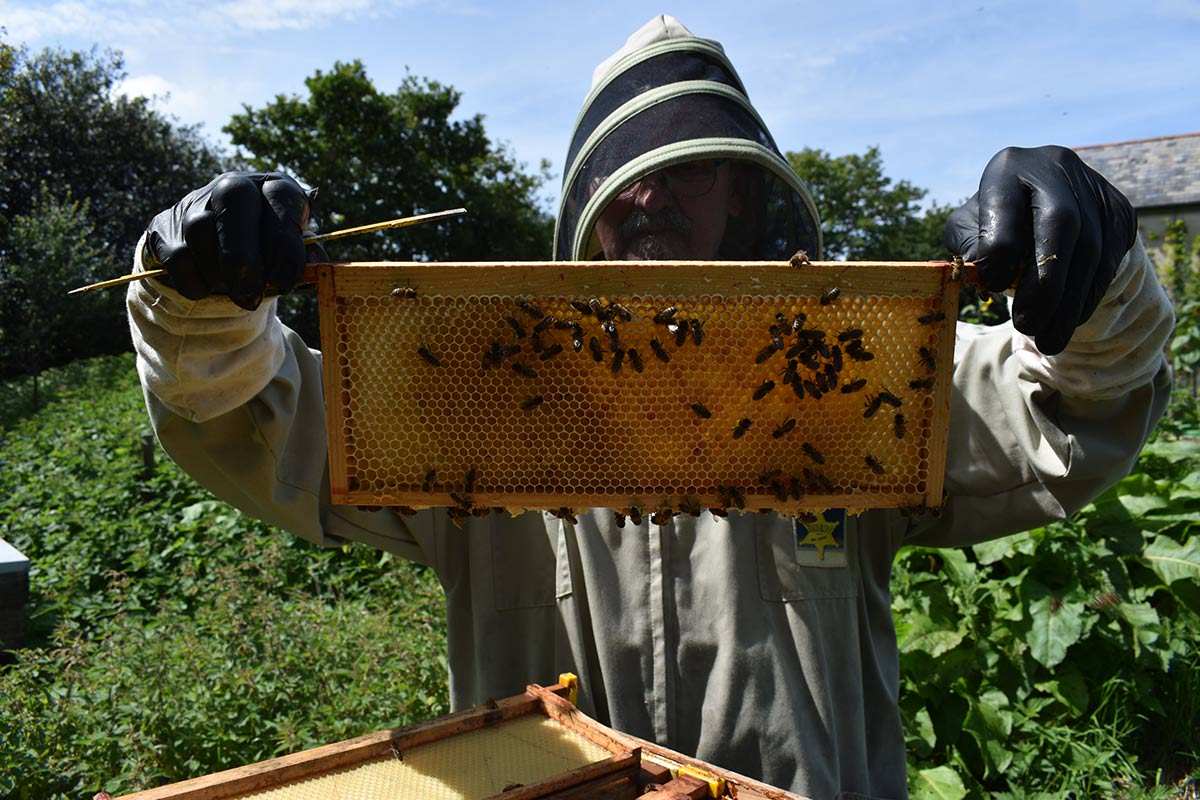
Picture a classic beehive. Along the base is an entrance space for bees to come and go, often with a little landing platform and a mesh floor allowing ventilation and debris to drop through. The next blocky section on top of this is the brood box. Here the Queen lays eggs in hexagonal cells, and her offspring are fed, cleaned, and eventually sealed into these safe spaces to mature until they are fully formed bees ready to hatch and be given a job of work.
Above the brood space are piled the ‘supers’ or boxes of frames in which the combs are created. As they are filled and the honey capped off, the beekeeper removes as many ‘supers’ as he or she sees fit and, in the productive summer months, leaves more to be filled.
Seasonal Foraging Patterns
All through Spring and Summer, our bees have been ferrying tiny morsels of pollen and soupçons of nectar from far and wide. Their gathering changes as the seasons turn:
- Early in the Year: Tree flowers.
- Spring: Yellow flowers such as dandelions and primroses.
- Summer: Clover fields looking as white as snow.
- Late Autumn: Sugary droplets forming on tiny florette tentacles of the ivy flowers, their last harvest before Winter.
Preparing the Hive for Winter
Beekeeping tasks change with the seasons too. The final ‘supers’ of the year are harvested, spun, and bottled. I say stolen, for it is, indeed, stealing to take honey from bees; it is, after all, their winter larder prepared for their Queen and her offspring, next year’s brood. We humans have already benefited once from the bees’ job of pollinating our own cornucopia.
Bees don’t hibernate; they remain busy feeding, tending, and cleaning, and use up a lot of energy generating heat to keep the hive alive. On warm days, they will venture out. Sensitive beekeepers will leave at least one full super for the winter bees; after all, this is their food!
If, towards the end of winter, it appears that honey stores are running low—for who knows how long or short a winter may be—the beekeeper must decide whether they need to supplement the bees with some ‘junk food.’ Junk food is better than no food, and a basic sugar feed can be placed under the roof without disturbing the bulk of the hive, with fingers crossed for some warm days so the bees can venture out for their rightful natural food of pollen and nectar.
It’s also time now to make the hive safe and attach mouse guards, for mice are honey thieves too! The entrance space is reduced, made cozy against gusting wintry winds, and the bees will seal up any holes and gaps with their magical propolis. No more breaking into the home; the beekeeper should now stay away, respecting the privacy of the bees, using only the weight, or heft, of the hive to gauge whether the bees have food left, but also putting a regular ear to the hive wall to listen for the drone of bee bodies guarding and keeping the Queen safe, warm, and fed. (It was believed by some ancient cultures that the perpetual motion and hum of the bees through winter was what kept the Earth alive until Spring.)
Challenges: Diseases and Parasites
Supporting Bee Populations
Stay Connected to the Future of Healthy Farming
Our newsletter brings you real farmer stories, views and news of our latest training and events, plus on-farm tips and insights.