
How Medicinal Herbs & Herbal Leys Improve Soil Health and Livestock Resilience
By Kate Scott BSc, medical herbalist, shepherdess & agricultural consultant
At WHAG, we’re delighted to be working with Kate Scott—a farmer, medical herbalist, and agricultural consultant with a long family heritage of herbalists and drovers. Kate’s deep understanding of plant-based livestock care and regenerative farming methods is backed up by hands-on experience and academic study—she’s currently completing an MSc in Sustainable and Efficient Food Production, all while managing a flock of grass-fed Poll Dorset ewes.
After a spring of extreme weather, Kate reflects on practical ways to support soil and animal health—even on a tight budget.
A Wild Spring: Mud, Drought & Mob Grazing
It was a challenging spring for most of us. We had early drought, then weeks of torrential rain—not exactly the recipe for easy cattle turnout, planting, or a smooth first cut.
As unpredictable weather becomes the norm, many of us are thinking more seriously about soil structure and how we can adapt. The good news? Even with limited resources, there are simple, effective ways to build soil resilience that benefit both land and livestock.
The Power of Herbal Leys for Soil and Stock
There’s a lot of talk about herbal leys, and for good reason. But they’re not a magic bullet—they need the right management.
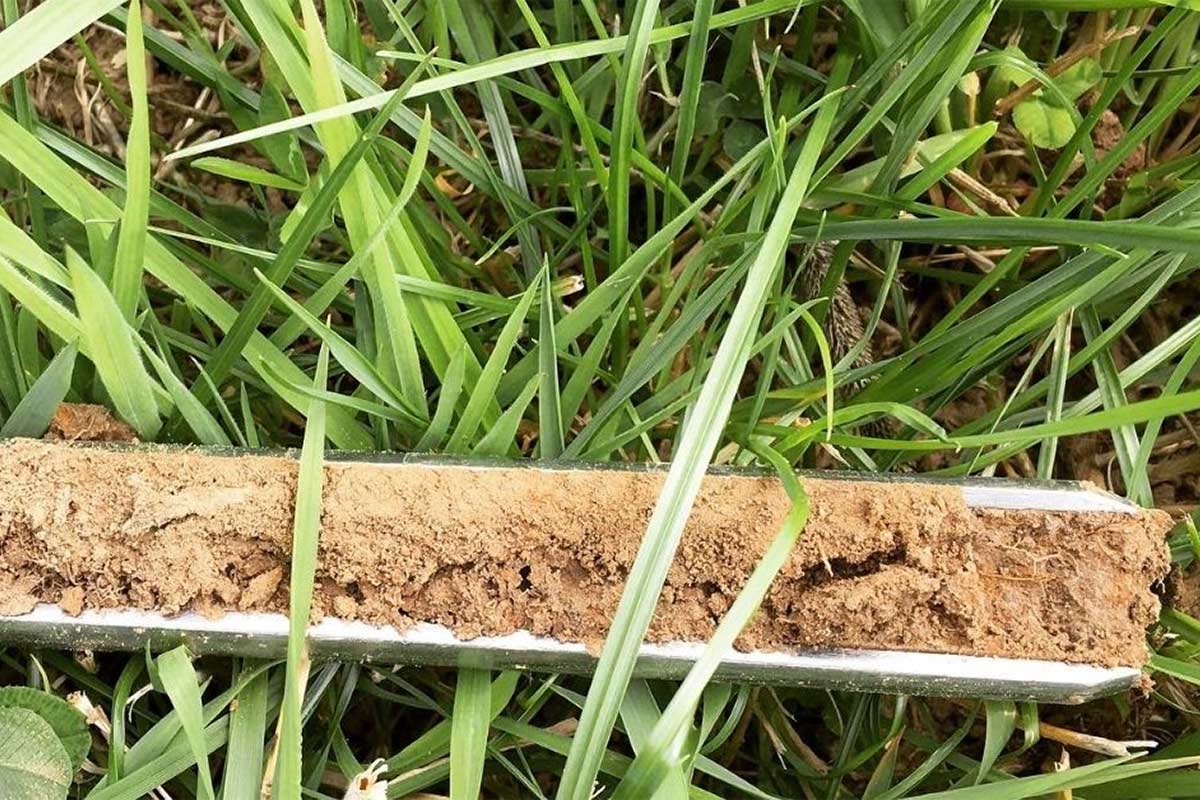
On a visit to a heavy clay farm last year, I saw firsthand the contrast between fields under regenerative rotation and those that had been rented out for forage cropping.
Using the Visual Evaluation of Soil Structure (VESS), I found:
- Fields overseeded with deep-rooted herbs like chicory had better aeration and rooting depth
- Improved water retention in dry periods
- Better drainage in wet spells
- A visible increase in biodiversity (both soil and surface-level)
- A shift toward resilience, not just recovery
The farmer was mob grazing sheep using small paddocks, portable fencing, a trampoline-like shelter on wheels, and a portable trough. It was practical, low-tech, and effective. Mob grazing, when well managed, is a game-changer.
Deep-Rooted Herbs: Healing from the Ground Up
Some of my go-to herbal ley plants for soil health and animal health include:
- Chicory – Deep roots help aerate compact soils; high in minerals
- Yarrow – Supports both biodiversity and circulation in animals
- Sheep’s parsley – Encourages digestion and detox
- Burnet – Anti-inflammatory and drought-tolerant
- Sainfoin – Rich in tannins, aids parasite control (best on chalky soils)
- Lucerne (Alfalfa) – Suits heavier ground; protein-rich forage
Each plant contributes differently to soil structure, biodiversity, and holistic animal health—this is regenerative farming at its best.
Internal Health Starts with the Soil
Tannins in plants like sainfoin and chicory have been shown to help manage internal parasites—a major concern as anthelmintic resistance increases.
Choosing the right mix for your soil type is essential:
- Sainfoin thrives on alkaline, chalky soils
- Lucerne handles heavy ground better
- Yarrow and chicory are versatile and tolerant
A solid grazing plan, using rotation and rest, helps:
- Reduce compaction
- Prevent erosion
- Maximise plant health and regrowth
- Support animal behaviour and gut health
Agroforestry: Back to the Future
Trees are not just for aesthetics. Their deep roots support:
- Water regulation (drainage and retention)
- Shelter and shade for livestock
- Browsing nutrition—leaves are mineral-rich
- Habitat for birds and beneficial insects
Farmers of old knew what we’re rediscovering now: trees are vital to whole farm health. As we move toward agroforestry, we’re not reinventing the wheel—we’re returning to a diverse, resilient farming landscape.
Of course, saplings need protection from nibblers, but mature trees and hedgerows are underused allies in our quest for sustainable farming.
Plan Now, Reap Later
If you’re feeling overwhelmed by weather patterns or soil health worries, you’re not alone. But the best time to take action is before things get worse.
Even simple changes—like introducing a few deep-rooted herbs or planning a better rotational grazing strategy—can lead to big benefits in soil resilience and livestock wellbeing.
Your soil is precious. Treat it like gold, and it will pay you back for years to come.
Warmly,
Kate

About the author
Kate Scott BSc is a medical herbalist, agricultural consultant, and shepherdess with a heritage rooted in generations of herbalists and drovers. She works as a training provider for Whole Health Agriculture. and runs Roundhill Agricultural Consultancy and The Drover’s Daughter, where she combines her expertise in herbal medicine with hands-on farming. She also researches sustainable farming methods and creates botanical products using sheep’s milk and wild plants.
Learn more about Kate on our team page and check out The Drover’s Daughter for more herbal and farming insights from Kate.
Stay Connected to the Future of Healthy Farming
Our newsletter brings you real farmer stories, views and news of our latest training and events, plus on-farm tips and insights.