
Natural Fly Control for Livestock: A Whole Health Approach to External Pests & Parasites
Livestock parasites are nothing new — but climate change is shifting the goalposts. In recent years, reports of Schmallenberg and Bluetongue viruses (spread by culicoides midges from Europe) have surfaced in the UK and Ireland. These are serious diseases, and with warmer, wetter conditions, pest pressures are only increasing.
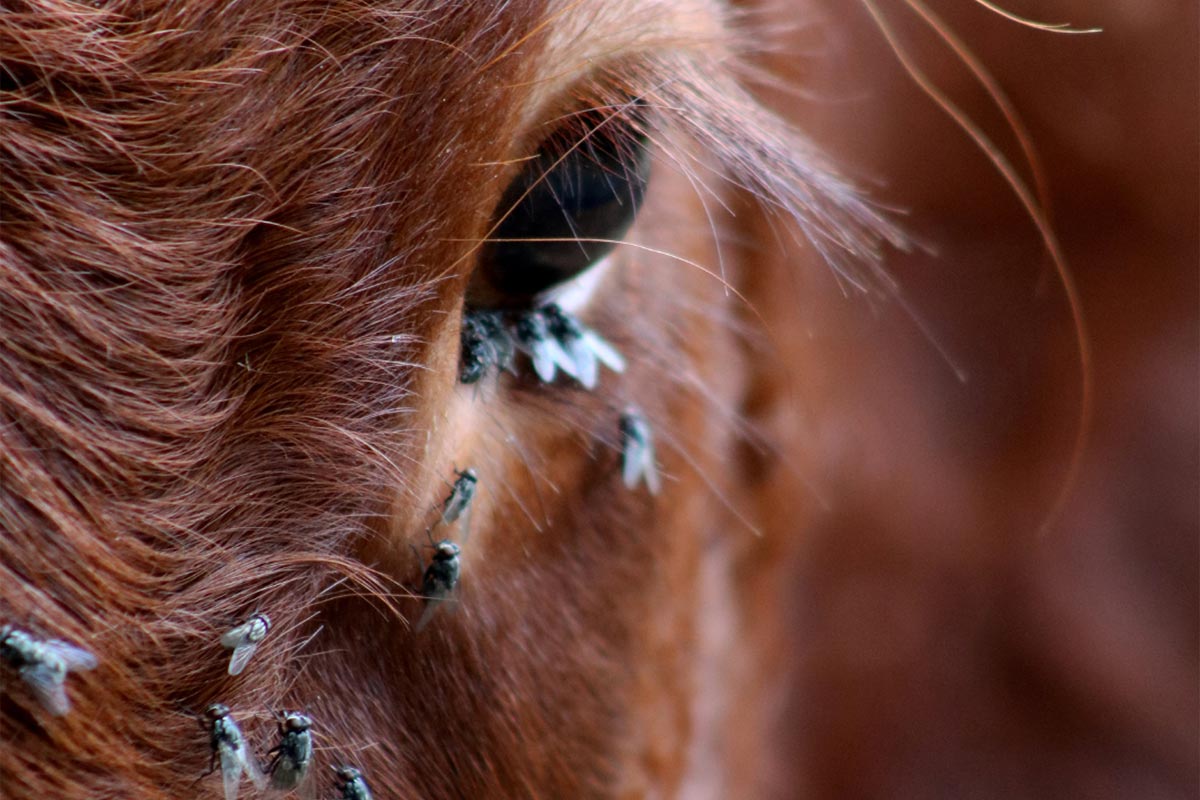
Even common flies — like the head fly (Hydrotea irritans) — can cause major issues: summer mastitis, flystrike, eye infections, and more. A Whole Health approach offers an adaptable, preventative framework that many farmers are already using to reduce pest impact and support resilience in their livestock.
Why a Whole Health Strategy Matters
There’s currently no conventional solution for Schmallenberg, and although work is ongoing to develop a Bluetongue vaccine, mortality can reach up to 30%. Other pests — like the stable fly or midges — can lead to welfare issues, stress, and reduced productivity.
A Whole Health strategy, such as the one taught in WHAg’s Farm Foundation Course, is about building resilience from the ground up — through nutrition, natural treatments, low-stress handling, and appropriate interventions when needed.
Understanding the Health Spectrum: Red, Amber, Green
Livestock health can be thought of in three phases:
- Green Level: Healthy, happy, thriving. Good husbandry and nutrition maintain this.
- Amber Level: Sub-optimal health. Animals may not be ill, but they’re struggling — not recovering, not thriving. This is where natural inputs shine.
- Red Level: Sick animals that need veterinary attention or medication.
Most parasitic problems start at Amber. Identifying them early helps avoid slipping into Red.
Stress, often from handling, changes in housing, or external pest pressure, lowers immunity. Recognising and responding to Amber-level health is a vital part of prevention.
Read more about the Three-Phase Health Model here.
Host vs Parasite: Who’s Winning?
Parasites don’t succeed just because they’re there. They succeed when conditions favour them — and when hosts are compromised.
- Resilient hosts = fewer problems.
- Weakened hosts = parasite heaven.
Learning the lifecycle of the pest (midge, fly, louse, tick) helps target your control strategy. But be cautious of biased sources — many are produced by pharmaceutical companies with a product to sell.
Are Synthetic Chemicals the Answer?
Conventional pour-ons and treatments have their place, especially in Red-Level emergencies. But there are downsides:
- Resistance: Parasites evolve quickly.
- Environmental damage: Ecosystems suffer.
- Residues: Withdrawal periods apply.
- Animal reactions: Sensitivities or toxicity risks.
- Cost: It all adds up.
This is why prevention is better than cure — and Whole Health offers a broader toolbox.
The Whole Health 4-Step Plan for Ectoparasites
This approach works for flies, ticks, midges, and more:
1. Minimise Exposure
Conventional pour-ons and treatments have their place, especially in Red-Level emergencies. But there are downsides:
- Manure & Bedding: Remove breeding grounds — clean regularly, keep dry.
- Shelter: Flies avoid deep shade — dark barns or shelters can help reduce fly pressure.
- Hygiene: Discharges, wounds, pus, faeces — all attract flies. Prompt cleaning is key.
2. Reduce Stress
- Stress suppresses immunity — and makes animals more attractive to flies.
- Lower-stress animals = more resilient hosts.
- Consider remedies like Rescue Remedy or homeopathic ‘Triple A‘ to calm anxious animals during handling or outbreaks.
3. Boost Host Health
- Gut health = immune health. Add garlic, ACV, and medicinal herbs to feed
- Homeopathic options:
- Nosodes (fly, tick, midge)
- Sulphur, Ledum, Staphysagria
Learn more via WHAg’s webinar: https://learning.wholehealthag.org/parasites-and-pests-alternative-solutions.
Pammy’s Natural Fly Combo (Tried & Trusted)
WHAg Livestock Health Adviser Pammy uses this combo on her dairy herd with good results:
- Nosode: Psorinum 30c (or another pest-specific nosode)
- Remedies: Ledum, Staphysagria, Sulphur, Ignatia – all at 30c
Mix one dose of each remedy into ~250ml water. Add 1 tbsp vodka or cider vinegar as a preservative.
Label and store out of sunlight.
Use: Spray onto troughs/buckets or directly (e.g. muzzles, udders) during fly-heavy times. Reduce as symptoms improve.
4. Weaken/Repel the Parasite
- Essential oils (always diluted!): Neem, citronella, lavender, eucalyptus
- Herbal sprays (e.g. dairy farmer Pat Aherne’s mix)
- Narayani’s Stings & Bites Remedy (Apis, Ledum, War) for infected bites. This is their Stings and Bites combination and comprises Apis, Ledum and War
NEVER apply neat essential oils directly to livestock.
Try dairy farmer Pat Aherne’s herbal recipe for fly repellent here.
For Smallholders & Pet Owners
Fleas, ticks, mites — same principles apply.
- Diatomaceous earth (food grade): Sprinkle on pets and bedding
- Natural flea products: Try Flea Away, Billy No Mates, or Homeobotanical “Pulex”
- Tick necklaces (EM tech): Some success reported — read more at Harbour Hounds
Final Thoughts
The more time you spend in the Green Level, the less time (and money) you’ll spend at the Red. A Whole Health approach isn’t about perfection — it’s about building resilient animals, being proactive at Amber, and keeping pest pressure low through practical, holistic, and low-cost strategies.
Tips for finding more information:
Chris Aukland recommends the book, Fleas Be Gone by Christina Chambreau.
You will find many useful articles at Dogs Naturally magazine on various small animal pests.
CAM4animals can always be relied upon to have a library of great information on all forms of holistic approaches. Here’s a blog on ticks, compiled by their supporters, so it includes tried and tested alternatives. There are also several blogs covering fleas, choose from this search link.
Stay Connected to the Future of Healthy Farming
Our newsletter brings you real farmer stories, views and news of our latest training and events, plus on-farm tips and insights.