
Humility, Homeopathy, and Holism: A Farmer’s Perspective
By Martin, Organic Upland Farmer for 30+ Years
Why a shift in mindset could be the best prescription for health—ours, our animals’, and the Earth’s?
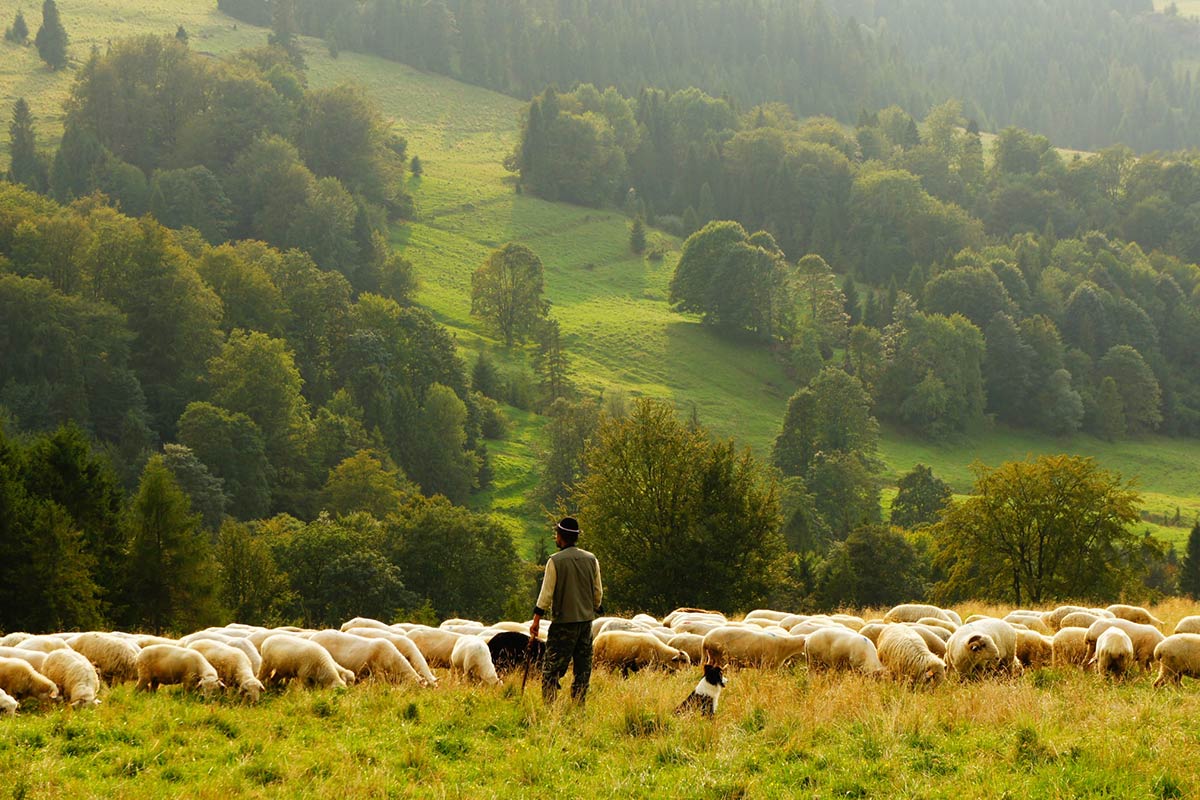
I’ve been a small organic upland farmer for over three decades—raising beef in the past, and currently sheep. I’m not a vet or scientist, but I’ve been around long enough to know that nature has the upper hand. I’ve watched Orf clear up in my sheep after a dose of homeopathic thuja, and I’ve nursed my own prolapsed spine with help from a homeopath. None of it came with guarantees—but it worked. And I’m still here, still farming.
This isn’t a pitch. It’s a perspective. One that’s grown from years of muddy boots, tough winters, and open-minded observation.
What Sheep and a Bad Back Taught Me
I can’t recall exactly when I first heard about using thuja for treating Orf in sheep—but when mine got it years ago, I reached for it without hesitation.
Conventional veterinary advice? Wait it out. Maybe use antibiotics if a secondary infection appeared.
But that didn’t sit well with me. I’m a sceptical bloke by nature, but I’ve also learned this:
If something works consistently, there’s probably a reason—even if science hasn’t caught up yet.
Science, Homeopathy, and Common Sense
A vet friend recently told me about growing hostility toward veterinary homeopathy—mostly based on the claim that “it isn’t scientific.”
Which begs the question: what counts as science?
Take mental health. Will Self recently made this exact point on Radio 4: for decades, treatments have been based on shifting ideas, sketchy evidence, and guesswork.
Science changes. Opinions evolve. Drug companies—whose research is often taken as gospel—have shareholders and profit margins to protect.
So when people say, “That’s not scientific,” we might ask:
- Based on whose science?
- Funded by whom?
- And what else might be true that we haven’t “proven” yet?
Climate Change, Nitrogen, and Nature’s Intelligence
Let’s pan out for a second. As I write, citizens in 90 countries are taking action on climate change. They’re demanding a shift in how governments treat our future.
Meanwhile, science tells us:
- 1 tonne of synthetic nitrogen fertiliser = 6 tonnes of CO₂ during manufacture.
- It harms soil microbes, reducing long-term fertility.
- The result? More greenhouse gases.
But here’s the kicker:
If agriculture moves in the right, regenerative direction—globally and holistically—it can save the planet.
Where Homeopathy Fits In
Homeopathy is holistic. It looks at the whole:
- The animal, not just the symptom.
- The terrain, not just the treatment.
- The root cause, not just the result.
Isn’t that what we need now? Whether it’s sheep with Orf, a farmer with a bad back, or a planet in a climate crisis?
Maybe it’s time those in charge take a leaf out of the homeopath’s book. Look at the whole picture. Support self-healing. Act in the interest of long-term health, not short-term profit.
Final Thoughts: Nature Knows Best
“Nature is clever—very clever. People might get it wrong, but nature doesn’t.”
If we want a future worth farming for, it’s time for global humility. To let nature lead. And perhaps, to listen to the “nonsensical” ideas that keep proving themselves right in the field, again and again.

About the author
Martin has been an organic upland farmer for over 30 years, raising beef and sheep with a deep respect for nature’s intelligence. His practical experience informs his holistic approach to both animal and human health.
Stay Connected to the Future of Healthy Farming
Our newsletter brings you real farmer stories, views and news of our latest training and events, plus on-farm tips and insights.