
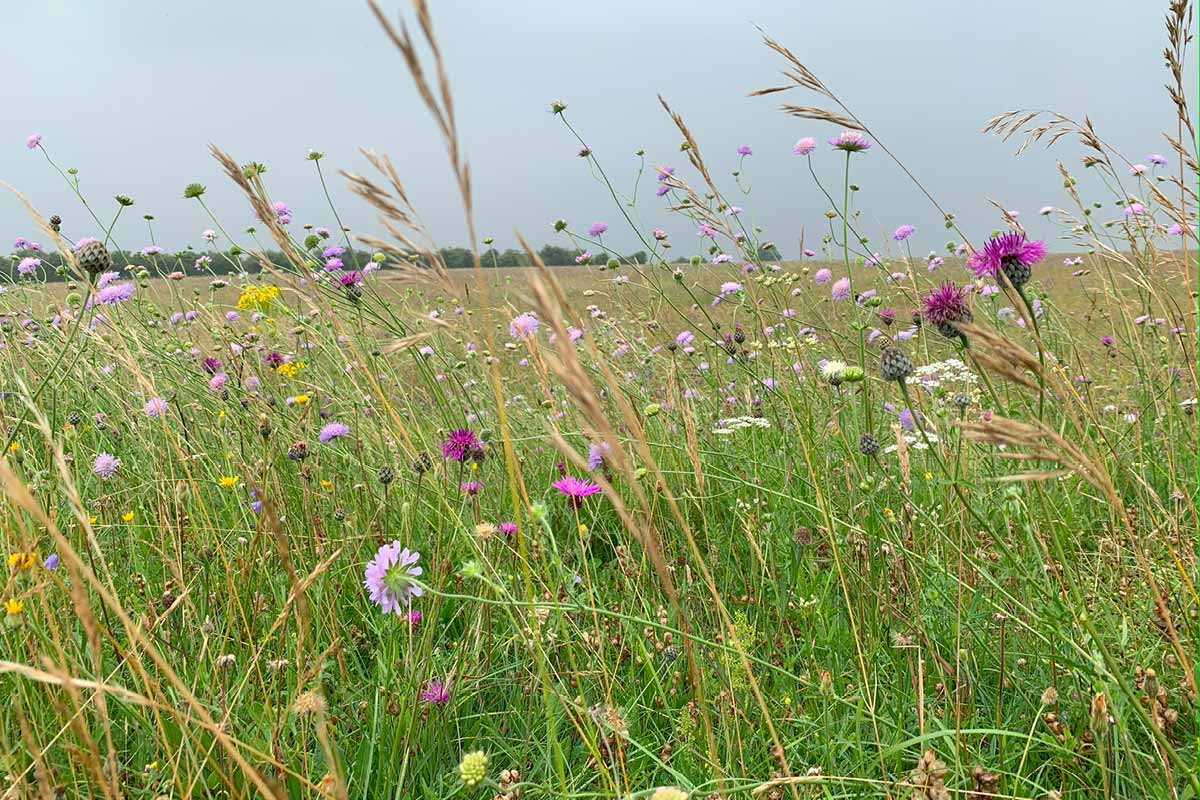
Medicine Fields: How Diverse Pastures Boost Soil & Livestock Health
By Kate Scott BSc, medical herbalist, shepherdess & agricultural consultant
Why Biodiversity is the Key to Healthier Farms
As a medical herbalist, agricultural consultant, and shepherdess, I’ve spent years working with farmers to improve pasture health and livestock resilience. My passion for diverse forage isn’t just theoretical—I see the benefits daily in my own flock and the farms I advise.
How We Lost Plant Diversity—And Why It Matters
Over the decades, agriculture has shifted toward high-yield monocultures, favoring fast-growing ryegrasses while pushing out the natural diversity that once supported soil health, livestock nutrition, and pollinators. But I’ve learned through experience—and research confirms—that bringing back biodiversity leads to healthier animals, more resilient soil, and reduced reliance on external inputs.
So how do we start? It all begins with understanding our soil and selecting the right plants to restore balance.
I once ran a workshop for primary school children, asking them to describe the playing field in front of them. The answer was always the same: “Grass!” But when I handed them hula hoops and asked them to examine the plants inside their circle, they found more than just grass—daisies, plantain, dandelions, and yarrow, all quietly playing their role in the ecosystem.
This small exercise mirrors what has happened to our pastures over the years. After WWII, agriculture shifted toward fast food production. Quick-growing ryegrasses took over, native livestock breeds were bred for size, and hedgerows disappeared to make room for larger fields. In the process, we lost much of the diversity that once supported soil health, livestock nutrition, and pollinator species.
But research now shows the incredible benefits of diverse pastures—not just for soil health, but for livestock productivity and resilience. As farmers, we have a responsibility to bring back this biodiversity. Without healthy soil, we don’t have healthy plants. And without nutritious plants, our livestock suffer.
“Let food be thy medicine, and medicine be thy food”
Hippocrates
The Secret to Productive Pastures: Soil First
To rebuild diverse, resilient pastures, we need to start from the ground up—literally. Healthy soil is the foundation of productive farmland. It supports nutrient-rich forage, retains moisture, fosters beneficial microbes, and reduces reliance on synthetic inputs.
But modern agricultural practices have depleted our soils. Heavy machinery compacts the ground, synthetic fertilisers disrupt microbial life, and monocultures strip away organic matter. The result? Soils that struggle to sustain life—plant, microbial, or animal.
If we want thriving pastures, we need to restore soil health. That means:
- Encouraging deep-rooted plants to improve structure and water retention.
- Balancing soil microbes to enhance nutrient cycling.
- Introducing organic matter to feed life below ground.
For a deeper dive into soil health and how medicinal herbs play a role in regeneration, read my blog on Soil Health and Medicinal Herbs.
What Your Soil Needs for Resilient Growth
Every farm is different, so before choosing a pasture mix, the first step is understanding your soil type. For example:
- Sainfoin thrives in free-draining soils, while lucerne prefers heavy clay.
- Legumes naturally fix nitrogen, reducing the need for artificial fertilisers.
- Deep-rooted grasses and forbs improve soil structure and drought resilience.
- A variety of plants creates a self-sustaining cycle of nutrients and microbial activity.
With the right approach, soil becomes self-sustaining, reducing costs and improving pasture resilience.
What’s in a Herbal Ley? The Power of Plant Variety
If you’ve ever bought a herbal ley seed mix, you’ll notice the species list—starting with grasses, then legumes, followed by herbs. Each plays a unique role:
1. The Grass Base
Grasses provide the foundation of any pasture, but variety is key:
- Cocksfoot (Dactylis glomerata) – Deep-rooted, drought-tolerant, and great for early spring grazing.
- Ryegrasses – High in sugars, excellent for digestibility, but can struggle in drought.
- Timothy (Phleum pratense) – Loves wet conditions and is well-suited for cutting.
- Fescue (Festuca pratense) – Highly palatable, supports clover growth, and doesn’t require excess nitrogen.
- Festulolium – A hybrid combining drought resilience with vigor.
2. Protein-Rich Legumes
Legumes add nitrogen to the soil, boost protein levels, and enhance digestibility:
- Alsike clover – Once common, thrives in challenging conditions.
- Sweet clover (Melilot) – Highly nutritious, nitrogen-fixing, and attractive to pollinators.
- Red clovers – Provide long-season flowering and rich protein content.
- Birdsfoot trefoil – A standout plant that:
- Thrives in poor soil.
- Contains condensed tannins that help reduce worm burden and bloat (Lees, 2006).
- Supports soil aeration and biodiversity.
3. The Healing Herbs
Herbs play a vital role in livestock health and soil regeneration.
- Chicory – Deep-rooted, drought-tolerant, and helps control parasites.
- Burnet, yarrow & sheep’s parsley – Packed with vitamins and minerals.
- Plantain & mallow – Soothe digestion and support immune function.
- Meadowsweet & willow – Contain natural painkillers (salicin, the precursor to aspirin).
- Dandelion – A rich source of potassium, used as a diuretic in herbal medicine.
Hedgerows: The Overlooked Superfood for Livestock
Our hedgerows are more than just fences—they provide:
- Tannins in tree bark (oak, willow, elder) that livestock naturally seek out.
- Brambles and berries, which I’ve watched Shetland lambs gorge on daily!
- Medicinal plants that livestock instinctively graze for self-healing.
Why Farmers are Returning to Traditional Forage
Many of these plants have been used in traditional farming for centuries. Farmers once made nettle hay for winter feed, recognising its high vitamin and mineral content. Ivy leaves were commonly given to sick sheep. Cleavers, which support the lymphatic system, were fed to recovering livestock.
Modern research backs what farmers have always known: diverse forage promotes health and reduces the need for chemical interventions.
Is Your Pasture Working for Your Land, Livestock and Nature?
A diverse pasture is more than just good forage—it’s a self-sustaining system that nurtures the soil, livestock, and biodiversity. The more we understand the natural synergies between plants and animals, the less we need to rely on external inputs.
So, what’s the next step? Take a look at your pastures. Could they support a wider variety of species? What native plants are already thriving? Let’s start working with nature, not against it.
Blog References:
- J Frame, AS Laidlaw (2014). Improved Grassland Management. England: The Crowood Press Ltd
- Lees GL. (2006) Condensed tannins in some forage legumes: their role in the prevention of ruminant pasture bloat. Basic Life Sci. 1992;59:915-34. doi: 10.1007/978-1-4615-3476-1_55. PMID: 1417702.
- D Hoffmann (2003). Medical Herbalism. Vermont: The Healing Press
- S Wynn, B Fougere (2007). Veterinary Herbal Medicine. USA: Mosby Elsevier
- Juliette de Bairacli Levy (1952, 1963). Herbal Handbook for Farm and Stable London: Faber & Faber.

About the author
Kate Scott BSc is a medical herbalist, agricultural consultant, and shepherdess with a heritage rooted in generations of herbalists and drovers. She works as a training provider for Whole Health Agriculture. and runs Roundhill Agricultural Consultancy and The Drover’s Daughter, where she combines her expertise in herbal medicine with hands-on farming. She also researches sustainable farming methods and creates botanical products using sheep’s milk and wild plants.
Learn more about Kate on our team page and check out The Drover’s Daughter for more herbal and farming insights from Kate.
Stay Connected to the Future of Healthy Farming
Our newsletter brings you real farmer stories, views and news of our latest training and events, plus on-farm tips and insights.