
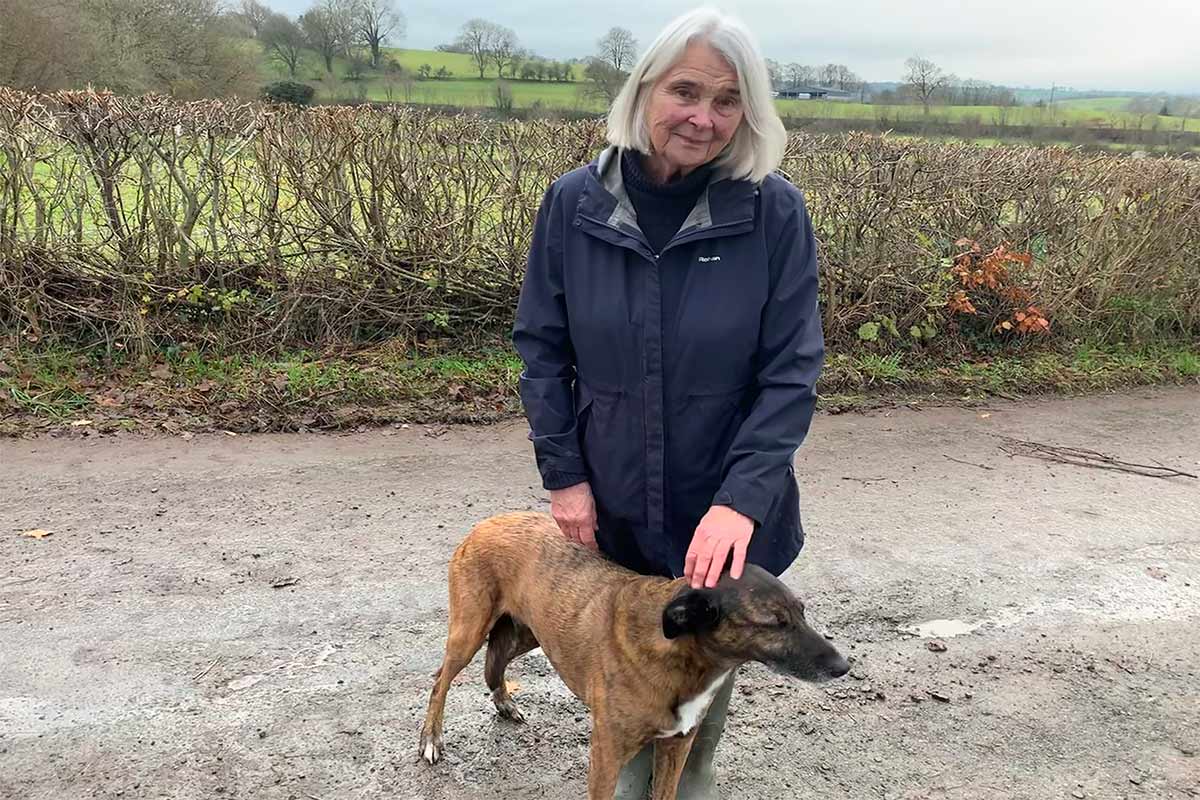
Composting for Soil Health with Anne Evans– 40 Years of Organic Growing in Wales
For over 40 years, Anne Evans has cultivated and sold organic vegetables at Blaencamel Organic Farm in the Aeron Valley, SW Wales, alongside her partner Peter Seggar. From running the farm independently between 1985 and 2005 to focusing on greenhouse production and plant raising, Anne’s expertise spans every aspect of the organic food supply chain. Through years of dedication, she’s helped shape a local farming community that thrives on sustainability, health, and the joy of growing.
Full details can be found on Blaencamel’s Facebook Page.
Fertility: The Foundation of Healthy Soil
Our farm is Grade 4 soil, and very stony. There are no external inputs and we implement a system of cover crops and composting for soil fertility. Vegetables are produced year round from 1.5 acres of greenhouses and approximately 12 acres of field crops. The greenhouses extend the growing season so that we have year round production of vegetables.
The fertility to grow our crops is based on 2 things:
Crop Rotation
We have already established that a healthy soil is required to produce healthy plants but in addition to this we chose the correct type and variety of plants that will suit our soil, we have given up trying to grow lupins! We aim to produce a ration for the cows which is balanced as well as being healthy and nutritious. We grow barley and vetch which complement each other, the barley providing starch energy and fibre whilst the vetch adds protein. This combination is under-sown with a red clover/white clover perennial ryegrass ley to grow on for grazing or conservation. This has also avoided the need for extra cultivation.
So the cows are hopefully now receiving a healthy, nutritional and well balanced diet of mainly ruminant forage in the form of Barley, Vetch, grass, clover and herbs. This is supplemented with a small amount of organic concentrate.
The milk from the cows is processed in our own dairy into a range of pasteurised (not homogenised) milk, cream, butter, kefir, yoghurt and ghee. We hope that our customers will benefit from the health of our soil, plants and animals reflected in these products.
- Grass/clover ley: We implement a three-year cycle, rotating fields between grass/clover or red clover leys before producing vegetables. This enriches the soil, prevents nutrient depletion, and promotes overall plant vitality.
- Rest periods: We no longer have sheep on the farm, allowing us to explore new management strategies for grass and green manures.
Composting: Feeding the Soil
For over 20 years, we’ve used the Controlled Microbial Composting (CMC) system, an aerobic composting method involving windrows, covers, and turners. The focus is on maintaining the ideal carbon-to-nitrogen ratio (C:N) for horticultural crops, which ensures that:
- Microorganisms thrive and support the soil’s health.
- We use a mix of vegetable waste, crop residues, clover, wood chip, and occasionally stable manure.
Compost isn’t just about fertilizing with nutrients—it’s about cultivating healthy microbial life. Similar to how our gut microbiome supports human health, these soil microorganisms are key to plant vitality and disease prevention.
Rotation and compost are the foundation of the farm’s health
The compost feeds the soil, not through NPK as such but by an inoculation of micro organisms which in the soil can breed up. We do not know what they all are, there are millions of them and they all have a function.
From our point of view, the more of them the better, and from as wide a range as possible. But the key is that they should come from good aerobic compost. The micro organisms work together to feed an environment which protects health.
We have thought for some time that this is analogous to human health and the role of the gut biome, an area of interest which is now receiving serious scientific attention.
Crop Health: Vitality Comes from Soil to Plate
- Good plant structure
- Intense flavor
- Vibrant color
Choosing Varieties for Maximum Flavor
We grow around 50 varieties of vegetables, mixing open-pollinated, heirloom seeds, and commercial hybrids. This balance allows us to maintain both:
- Commercial reliability (for yield and consistency)
- Exceptional flavor (as seen in varieties like Black Russian tomatoes and Elsanta strawberries, which have earned a reputation locally for their intense taste).
We do note that our growing system seems to add vitality to what you might term normal varieties. When customers are impressed with the flavour of something we have grown, the first thing they ask is what the variety is, as though this is bound to be the answer.
An example would be Elsanta strawberries, which until recently was the variety we grew in our greenhouses. This is a commercial variety commonly sold in supermarkets, from non-organic systems, and which frankly are underwhelming in flavour. Yet this same variety, grown in Blaencamel’s greenhouses, have a huge reputation locally for their flavour.
Another example is our carrots. These are grown from non-organic seeds. ‘Why?’ you might ask. The answer is that we had several crop failures following very wet weather, with the carrots ‘kipping’ and we resorted to a conventional F1 seed which could tolerate these conditions. Yet our carrots are well known for their intense flavour (and also vibrant colour and long shelf life).
We are of course talking about flavonoids and carotenoids.
The choice of varieties is complex; variety can definitely influence flavour, but it does not determine it.
As a side issue, we also grow some flowers. Again, as for example with sweet peas, what is noticeable is the vibrancy of their colour and intensity of fragrance. And also a long vase life.
Unusual Varieties: Experimenting with New Flavors
Another side note. We also like to search out experimental crops to try for the first time. These could be based on our travels, or reading, or responding to suggestions from chefs or requests from customers.
Recent examples are;
- Various types of heirloom tomatoes, as we sell a mixed selection of these. ‘Ageing hippies’ in California provide a good source of seed.
- Agretti, or Salsola, a samphire-like green vegetable found growing wild on the coastal plain of northern Italy but which thrives in our greenhouses and which our customers love.
- Other popular Italian greens, like chicories, which suit early greenhouse production.
- Japanese turnip, deliciously sweet, and recommended by an Australian master chef.
- Red carrots, responding to a heartfelt request from a Pakistani customer who longed for the carrots of her homeland.
These varieties often offer unique flavors or colors that delight our customers and provide early-season diversity.
Harvesting for Health: Timing and Care
Harvesting is not just about when the vegetables are ripe—it’s about how they are harvested. At Blaencamel, we prioritize:
- Intuitive timing based on weather patterns and crop observation.
- Speed of distribution, ensuring our crops reach local markets quickly for maximum freshness.
Our customers have noticed that our vegetables have a long shelf life, thanks in part to our composting practices. This is consistent with research showing that compost can significantly improve post-harvest quality.
Conclusion: Growing for Health, From Farm to Fork
While it’s essential to eat our five portions of vegetables a day, the true question lies in how those vegetables are grown. To truly benefit our health, we must consider the entire food chain—from soil health to crop vitality and ultimately, the way our food is prepared and consumed. Healthy soil is at the root of this transformation, influencing everything from nutrient density to flavor.
At Blaencamel, we’ve built our farming practices on a solid foundation of organic principles. We believe that sustainability, vitality, and flavor go hand in hand, creating food that is not only good for the planet but also for our bodies.